Benefits of routine comprehensive eye exams
Did you know that seeing 20/20 does not necessarily mean that you have healthy eyes? Eye examinations go far beyond just how well you can see. During a routine comprehensive examination, your optometrist will a have a detailed look into your eye health which can give insight into not only the health of your eyes but your overall general health as well. The eyes are essential for many daily activities and proper eye care can help preserve your vision and prevent eye diseases that can lead to vision loss or blindness.
Some common eye conditions that can be prevented or treated with regular eye care include:
- Refractive errors: These include nearsightedness, farsightedness, and astigmatism, which can be corrected with glasses, contact lenses, or refractive surgery.
- Glaucoma: A group of eye diseases that damage the optic nerve and can cause vision loss or blindness. Early detection and treatment can prevent or slow down vision loss.
- Cataracts: A clouding of the lens in the eye that can cause blurred vision. Surgery is often used to remove cataracts and restore vision.
- Age-related macular degeneration: A disease that affects the macula, the part of the retina responsible for central vision. Early detection and treatment can slow down the progression of the disease.
- Diabetic retinopathy: A complication of diabetes that can damage the blood vessels in the retina and cause vision loss. Regular eye exams can help detect the disease early and prevent vision loss.
Regular eye exams, a healthy diet, and protection from UV rays can help maintain the health of your eyes and prevent vision problems.
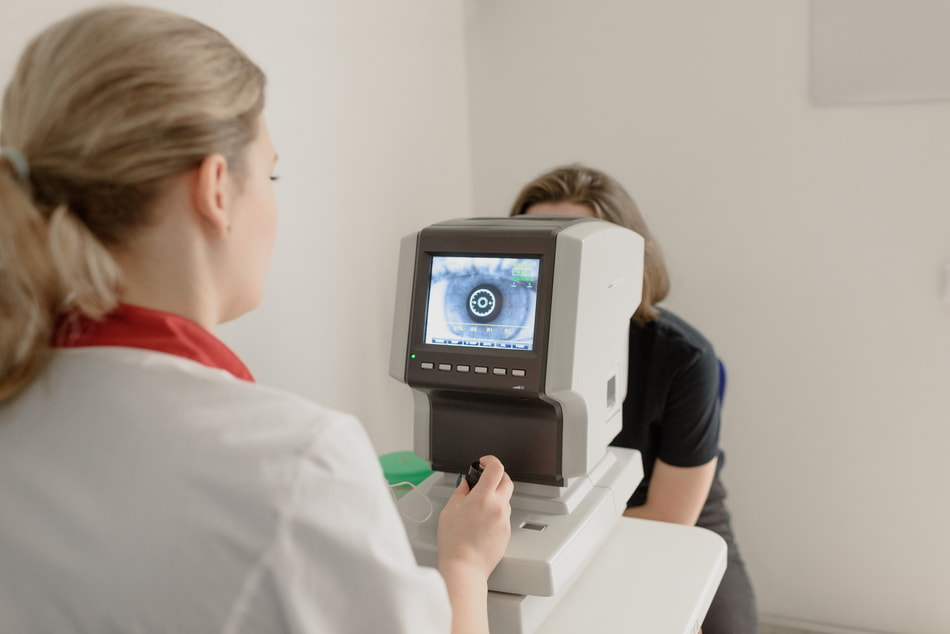
During a comprehensive eye exam, your optometrist will perform a variety of tests. Some of these may include:
- Visual acuity: Measures your ability to see details at various distances
- Refraction: Your refractive error determines your need for glasses or contact lenses
- Muscle balance: Checks for proper eye alignment and coordination
- Tonometry: Measures eye pressure and is used to assess the risk of developing glaucoma and/or monitoring how well a glaucoma treatment regime is working
- Pachymetry: Measures the thickness of the cornea
- Dilated fundus exam: Eye drops are used to widen the pupils to give the best view of the full retina, macula and optic nerve for signs of disease or damage.
- Visual field test: Checks your peripheral vision and sensitivity of the optic nerve
- Retinal image and OCT: Our retinal camera takes a photo of the central part of the back of the eye to use for assessment at that examination and comparison for changes at future visits. The OCT, or optical coherence tomography, takes detailed scans of the layers of the back of the eye including the macula and optic nerve head providing your optometrist with a comprehensive view that would otherwise not be seen
Should children also have their eyes examined?
Yes, of course! For children, regular eye exams are especially important as undiagnosed vision problems can affect their learning and development. Early detection of issues like refractive errors, lazy eyes (also known as amblyopia), and eye turns (also known as strabismus), allows for timely treatment and management, minimizing any potential impact on their visual development. It is recommended that children have their first eye examination at 6 months of age and yearly thereafter.